
Hospital Bed Procurement in Kenya: 4 Ways to Buy (2026 Cost & Compliance Guide)
Comparing import, local suppliers, used ex-UK beds & fabrication? See real costs, KMPDC & SHA compliance rules, and which route is safest for your clinic in 2026.
Kenya is facing a serious hospital bed crisis. Only 20% of health facilities in the country provide general admission services, according to the Kenya Health Facility Census (2023).
Making matters worse, public hospitals lost 2,200 beds in a single year, as reported in the Economic Survey (2025).
The result is dangerous overcrowding in public wards and a growing gap between patient demand and available inpatient capacity.
The Social Health Authority (SHA) 2025 directive has raised the stakes even further. SHA now vets hospital reimbursement claims based on licensed hospital bed capacity.
This means compliance is no longer just a regulatory checkbox; it is directly tied to your facility’s revenue.
A facility that cannot demonstrate the correct number of properly equipped, licensed beds risks losing SHA payments entirely.
Private healthcare facilities are stepping up. Many are expanding their bed capacity to absorb overflow from the public sector and meet rising compliance benchmarks.
Facilities that fail to maintain adequate bed numbers risk losing their monthly SHA claims.
This makes accurate bed procurement not only a matter of patient care but also of revenue protection for your facility.
But expanding bed capacity is only smart when you procure the right beds — the right way.
This guide compares the four main procurement routes:
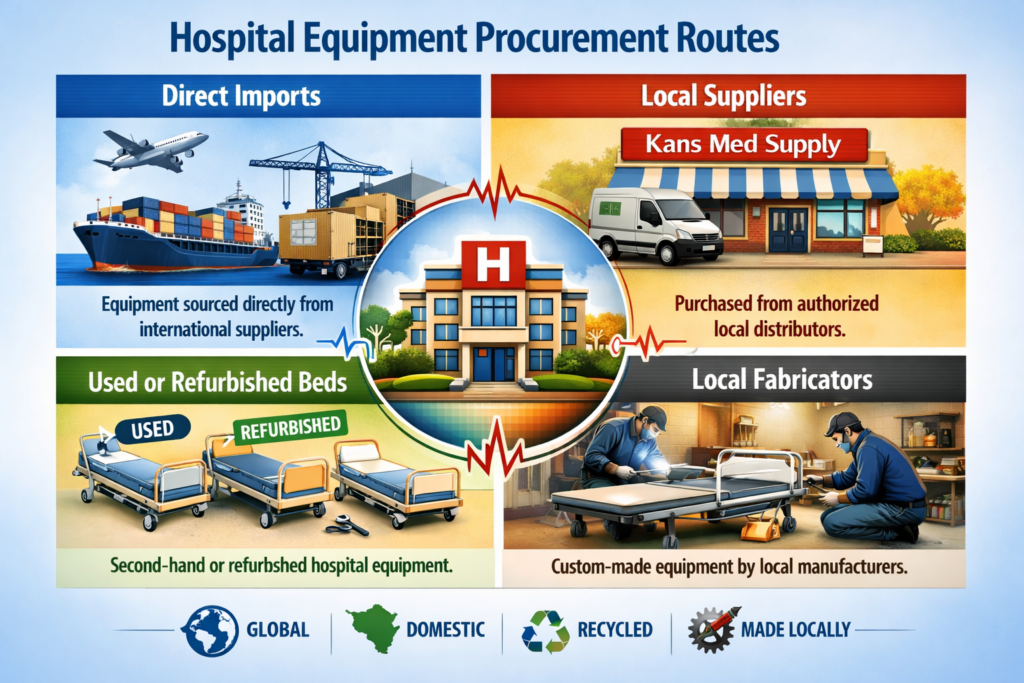
- Direct imports,
- Local suppliers,
- Used or refurbished beds,
- Local fabricators
It ensures your clinic can make a smart, compliant, and cost-effective decision today.
Discover the legal bed requirements, ISO compliance, and tax costs for different procurement routes.
For zero-risk delivery, biomedical support, and a fully stocked catalogue of certified brand-new hospital beds in Kenya, Kans Med Supply is Kenya’s most trusted local partner with 1000+ B2B relationships countrywide.
How Many Beds Does Your Facility Need?
The Kenya Medical Practitioners and Dentists Council (KMPDC) classifies all health facilities into six levels, each with specific bed requirements, staffing obligations, and service mandates.
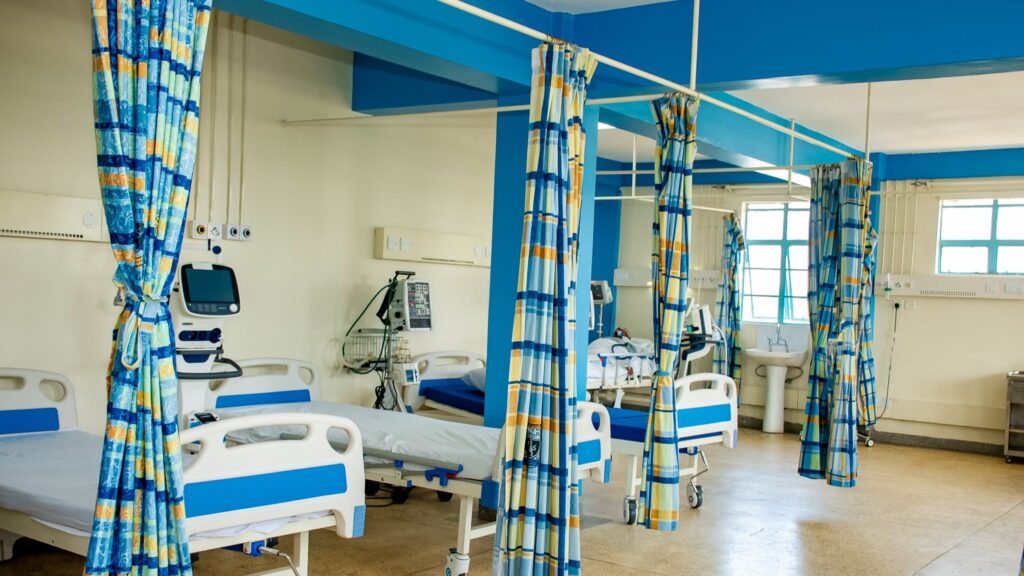
Image courtesy of https://nairobileo.co.ke/news/article | Aug 05, 2025
Understanding your facility level is the starting point for any procurement plan.[1]
| HOSPITAL LEVEL | DIRECTIVE REQUIREMENT | REFERENCE |
| Level 2 (Dispensaries) | Observational beds | Level 1 |
| Level 3A | 24-40 Inpatient Beds | LEVEL 3A Nursing Homes/Cottage Hospitals/Maternity Homes |
| Level 3C | 8-16 Inpatient Beds | Level 3C |
| Level 4A | 60+ Inpatient Beds | LEVEL 4A Checklist for the Categorization of Facilities NO 21. |
| Level 5 | 60+ Inpatient Beds | LEVEL 5B Checklist for the categorization of facilities NO.2 |
| Level 6B | 60+ Inpatient Beds | LEVEL 6B Checklist for the categorization of facilities |
Sources: KMPDC facility categorisation guidelines
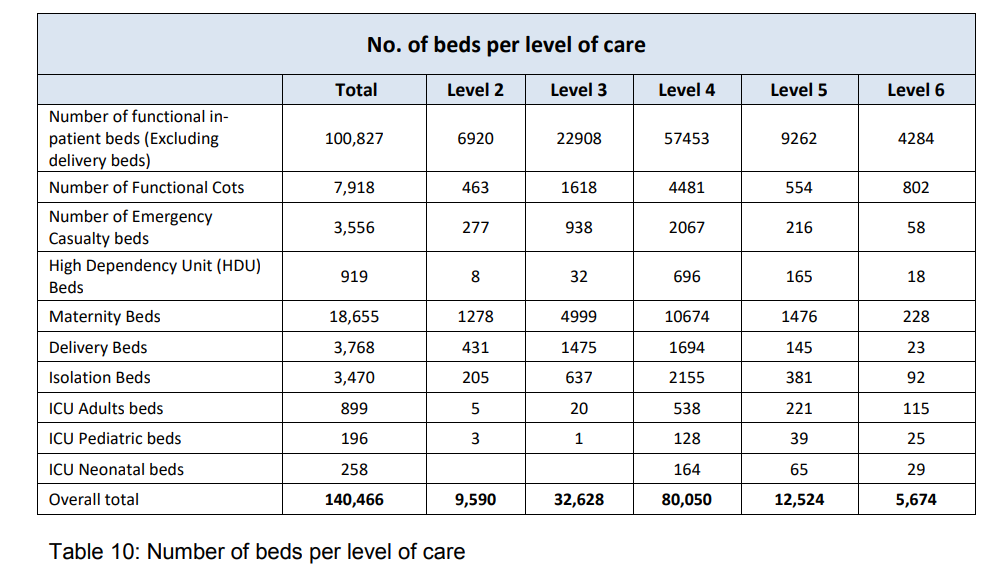
This data shows hospital bed capacity by level of care and by specialty type according to the Kenya Health Facility Census (2023).
Procurement Routes
1. Direct Imports
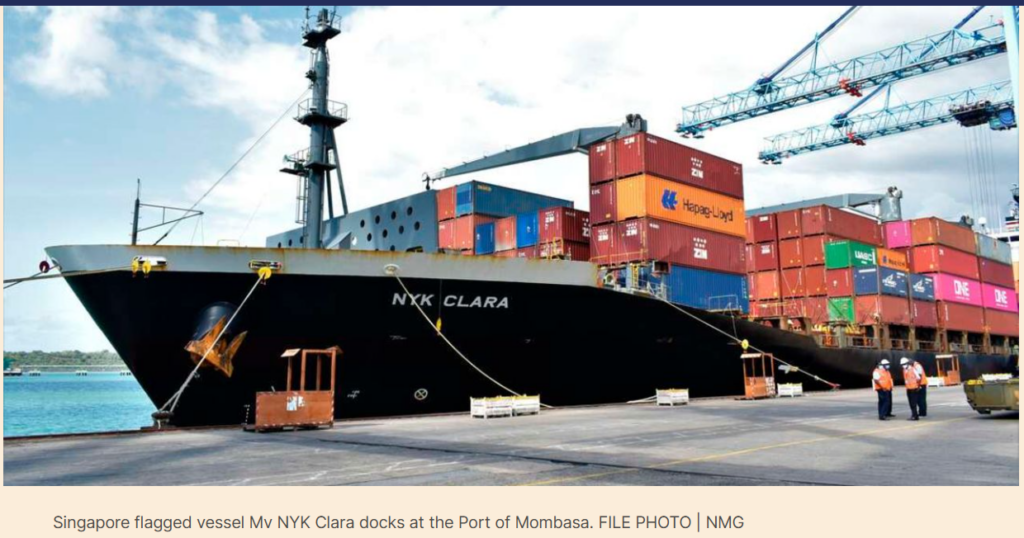
Some procurement officers import hospital beds directly from manufacturers in China, India, Pakistan, or Europe.
This can result in significant unit cost savings on bulk orders, but it carries substantial administrative, legal, and logistical burdens.
Legal Requirements for Direct Import
Kenya enforces a three-tier regulatory framework for all medical device imports:
- Pharmacy and Poisons Board (PPB) product registration
- KRA customs compliance
- KEBS standards verification
- Pharmacy and Poisons Board (PPB) Product Registration
The Pharmacy and Poisons Board (PPB) is the primary regulatory authority for medical devices in Kenya.[2]
All medical device importers must secure a medical device registration certificate and apply for an import permit per consignment via the Kenya National Trade Net System (KenTrade).[3] - Pre-Export Verification of Conformity (PVoC): As of September 2017, all medical devices entering Kenya must comply with the PVoC programme.
Importers must obtain a Certificate of Conformity (CoC) from KEBS before applying for import permits.[4] - EAC Standards Compliance: All devices must meet East African Community standards and hold valid ISO certifications before clearing customs.[2]
- KRA Customs Declaration: Goods must be declared through the Kenya Revenue Authority using a Customs Entry (IDF – Import Declaration Form), and all applicable duties and levies must be settled before release.
- Kenya Nuclear Regulatory Authority (KNRA): Relevant for any electrically powered equipment with potential radiation components (less common for standard beds but important to verify for fluoroscopy-enabled ICU beds).
Cost and Tax Implications of Direct Import
The cost of direct importation is frequently underestimated. Beyond the FOB (Free on Board) unit price, factor in the following:
- Import Duty: Under the EAC Common External Tariff (CET), hospital beds (HS Code 9402.90) attract varying duty rates.
The 2022 EAC CET introduced a four-band tariff structure.
Buyers should verify the specific applicable rate with a licensed clearing agent before committing to an order.[5] - VAT: The 2017/18 Kenyan budget introduced a VAT exemption on medical equipment and apparatus used in specialised hospitals.
However, subsequent budgets expanded VAT on certain medical supplies.
As of the 2023/2024 budget, VAT at 16% was applied to a wider range of advanced medical equipment.[6]
Your specific bed category and its tariff classification will determine whether VAT applies.
Consult a tax advisor or KRA for the current VAT schedule. - Railway Development Levy (RDL): 1.5% of the customs value is payable on all goods imported into Kenya for home use.[5]
- Freight and Insurance: Sea freight from China to Mombasa typically adds 8–15% to the FOB price per unit.
Air freight can cost three to five times more. - Clearing Agent Fees: A licensed clearing agent at Mombasa port or JKIA is mandatory.
Budget KSh 15,000–50,000 per consignment, depending on volume. - Port Dwell/Demurrage: Delayed documentation triggers daily demurrage charges.
A single week of delay on a 20-foot container can add KSh 50,000–200,000 to your costs.
Case Study: A County Hospital’s Direct Import Experience
The following is a composite case study based on experiences reported by procurement officers in Kenya’s hospital sector.
A 100-bed private hospital in Mombasa sourced 40 electric hospital beds from a Chinese manufacturer at USD 320 per unit (cheaper than local distributor quotes).
However, the total landed cost per bed, once import duty, PVoC fees, freight, port charges, clearing agent fees, and VAT were included, came to approximately USD 490 per unit.
The delivery timeline stretched to 14 weeks against the quoted 8, partly due to documentation delays at the PPB.
Three of the 40 beds arrived with damaged side rails, and the warranty claim process required engaging the manufacturer directly across a five-hour time difference.
The biomedical technician supporting the hospital was unfamiliar with the bed’s motor system, requiring a separate paid training engagement.
On reflection, the procurement officer noted that the true cost premium over a local supplier was less than 8%, and the risks and administrative burden were substantially higher.
This case illustrates a point many experienced procurement officers have come to accept: direct import is a viable option for facilities with strong procurement infrastructure and bulk order quantities, but it is rarely the zero-cost shortcut it appears to be at first glance.
2. Local suppliers
Purchasing new hospital beds from a licensed local medical supplier is the most practical and risk-managed procurement route available.
Hospital Beds for Sale in Nairobi
Suppliers like Kans Med Supply have established themselves as go-to partners for hospital owners and procurement officers across Kenya
Kans Med Supply offers a wide range of hospital-grade beds and medical furniture through a user-friendly ecommerce platform with verified delivery and after-sales support.
Advantages of Buying from Local Dealers
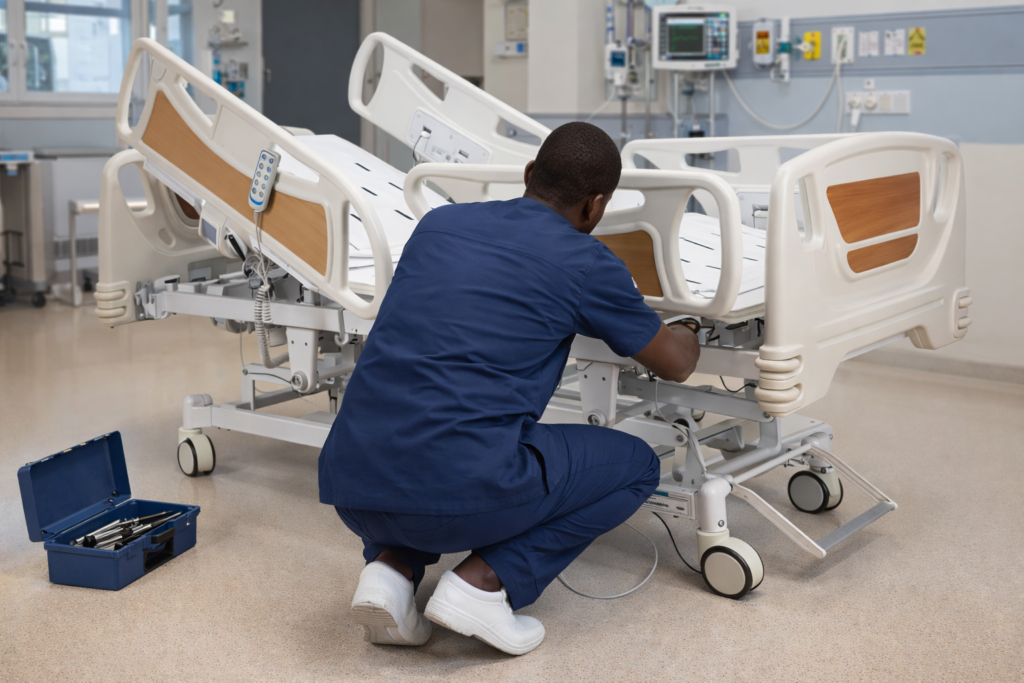
Biomedical Technician Servicing a 5 Crank Electric Hospital Bed
- Fast and Reliable Delivery:
Local suppliers maintain in-country stock, meaning your order can be delivered within days rather than the 8–14 weeks typical of direct imports.
For a new facility with a looming KMPDC inspection, delivery speed is not a convenience; it is a critical operational requirement. - Zero-Risk Delivery:
KansMedSupply’s delivery model ensures that beds arrive in verified condition.
Goods are inspected before dispatch and are delivered to your ward or storeroom, not just to the facility gate.
This eliminates the risk of receiving damaged goods with no recourse. - No Import Documentation Burden:
When you buy locally, the supplier has already handled PVoC compliance, PPB registration, duty payment, and KEBS verification.
You purchase a cleared, compliant product without engaging a clearing agent, a port, or a freight forwarder. - Returns and Replacements:
Local suppliers can process returns, replacements, and warranty claims quickly.
If a bed is defective, a local supplier can arrange for collection and replacement far faster than an overseas manufacturer. - Biomedical Technician Support:
This is one of the most undervalued benefits of local procurement.
KansMedSupply works with qualified biomedical technicians who can assist with installation, commissioning, staff training on bed operation, and routine maintenance.
For electric beds in particular, on-site technical support is essential. - Spare Parts Availability:
Local suppliers stock spare parts for the beds they sell, meaning a broken caster, a faulty side rail, or a worn crank handle can be replaced without an international shipping delay.
A lifeline for clinic operations continuity. - Relationship Building and Account Management:
A long-term relationship with a trusted local supplier gives your facility preferential access to new products, priority service during high-demand periods, and a single point of contact for all your medical furniture needs.
This relationship becomes particularly valuable as your facility grows and your procurement volumes increase. - Competitive Pricing on Volume Orders:
Local distributors can offer volume discounts for facilities outfitting multiple wards.
A procurement officer furnishing a 50-bed Level 4 facility can negotiate more effectively with a local supplier who has a commercial interest in the long-term relationship. - Invoice and Tax Compliance:
Local purchases come with proper VAT invoices and receipts, simplifying your facility’s financial records and making tax compliance straightforward. - Product Demonstration: Before committing to a large order, you can physically inspect and test a sample bed, something that is impossible when ordering from an overseas manufacturer online.
- Compliance Pre-Verified: Reputable local suppliers only stock products that have already passed KMPDC compliance requirements, meaning you do not carry the regulatory risk of an unverified import.
- Customisation Assistance: Need a bed in a specific colour, with a particular mattress type, or with custom side rail configurations?
A local supplier can advise on available options and customise orders within the manufacturer’s range. - E-commerce Convenience:
KansMedSupply’s online platform at www.kansmedsupply.co.ke allows procurement officers to browse, compare, and order beds from their office, with transparent pricing and product specifications available online. - Supporting the Local Economy:
Purchasing from Kenyan-registered distributors keeps value in the local economy and contributes to building a sustainable local medical supply ecosystem.
Tax Implications — Local Purchase (Are you leaving money on the table?)
When purchasing from a VAT-registered local supplier, you will typically receive an invoice with VAT applied at 16% (or the current applicable rate) or zero-rated VAT depending on the product classification.
For VAT-registered healthcare facilities, input VAT on purchases may be reclaimable.
Local purchases attract no import duty, no RDL, and no clearing agent fees, significantly simplifying your cost structure.
The Kenya Revenue Authority (KRA) gives a special tax break for buying machines and hospital equipment.
In the first year, you can claim 50% of the cost. After that, you claim 25% each year on the remaining value.
According to KRA, hospital furniture and fittings lose value at 10% each year. (Confirm this with your tax advisor or KRA.)
The tax depreciation can be done in two ways:
- Reducing balance: 10% of what is left each year
- straight line: the same amount every year.
3. Used Ex-UK and Fabricated Beds from Europe and America
A common procurement option in Kenya is the purchase of used hospital beds decommissioned from NHS hospitals in the United Kingdom, or fabricated in European and American workshops.
Advantages of Used Ex-UK and Fabricated Beds from Europe and America
- Lower unit cost:
A used NHS-grade electric hospital bed can sometimes be sourced for 30–60% of the cost of a new equivalent, making it attractive to budget-constrained facilities. - High original build quality:
NHS procurement standards are extremely rigorous.
A bed that served in a UK hospital was manufactured to meet demanding British Standards (BS EN 60601-2-52) and typically has a robust steel frame that outlasts many new lower-specification alternatives. - Full electric functionality at a lower cost:
Used electric beds give smaller facilities access to motorised positioning that would otherwise be unaffordable.
Disadvantages and Risks
- Unknown maintenance history:
A used bed’s service records are rarely transferred on resale.
You may be purchasing a bed that is near the end of its operational life, with worn actuators, degraded upholstery, or fatigued frame joints. - Spare parts challenges:
UK-manufactured beds (e.g., Huntleigh, Linet, or Arjo models) use European spare parts that are difficult and expensive to source in Kenya.
A broken actuator motor can render an electric bed permanently inoperable if the part cannot be found locally. - Import compliance requirements:
Used medical equipment is subject to the same regulatory framework as new imports:
PPB registration
PVoC compliance
KRA customs declaration
The PPB may require additional inspections for used devices.
Kenya’s regulatory framework makes no exemption for used medical equipment.[7] - No warranty or returns: Used beds are typically sold as-is. If a problem emerges after delivery, there is no manufacturer warranty and often no supplier warranty.
- Hygiene concerns: Used beds from any healthcare setting carry infection control risks.
Complete mattress replacement and full professional decontamination are mandatory before clinical use.
The cost of this process should be factored into the total acquisition price. - Age and obsolescence: Electric beds over 10 years old may use control systems or motors that are no longer manufactured, making repair impossible rather than just difficult.
Tax Implications — Used/Ex-UK Import
The same import duty, RDL (1.5%), clearing agent fees, and potential VAT apply to used medical equipment as to new imports.
There is no preferential tariff for used goods.
In some cases, customs valuation of used goods is contested by KRA, which may assess duty based on estimated replacement value rather than the purchase price, particularly if the declared value appears unusually low.
Engage a licensed clearing agent experienced in medical device imports to navigate this.
4. Buying from Local Fabricators
A fourth option available to Kenyan healthcare facilities is purchasing hospital beds from local metal fabricators.
This is especially common in upcountry areas where imported products are less accessible, or in facilities seeking very specific customised designs.
Advantages of Local Fabrication
- Durability of construction:
Local fabricators using heavy-gauge mild steel often produce structurally robust frames.
A well-built, locally fabricated bed can last 15 to 20 years with minimal maintenance, outlasting lighter-spec imported alternatives. - Customisation:
Fabricators can build to your exact ward dimensions, including non-standard widths, extra-long frames for tall patients, or bariatric configurations. - Lower cost:
Local fabrication can be the lowest-cost option for basic manual beds, particularly in bulk orders. - Local supply chain resilience:
No import documentation, no port delays, and no currency exposure.
Disadvantages and Critical Risks
- Lack of ISO certification: Local fabricators almost universally lack ISO 13485, ISO 9001, or CE certification.
This means their beds cannot be verified against international safety standards, and your facility carries the regulatory and liability risk. - Unapproved materials:
Some fabricators use mild steel that is not coated or treated for hospital environments, leading to rust, chipping, and contamination.
Mattress platforms may use materials that harbour moisture, bacteria, and pathogens. - No IEC 60601-2-52 compliance:
Anti-entrapment zones, mechanical load testing, and side rail geometry standards required by IEC 60601-2-52 are not verified in locally fabricated beds, creating a direct patient safety risk. - KMPDC compliance risk:
During facility inspection, KMPDC assessors may flag non-certified beds as non-compliant, potentially affecting your facility’s categorisation or licensing status. - No after-sales support:
Small fabricators rarely carry replacement parts or offer structured maintenance contracts. - Hygiene material standards:
Hospital-grade beds require upholstery, joints, and surfaces that meet infection prevention and control (IPC) standards.
Most local fabricators do not use medical-grade upholstery or seamless frame designs required for hospital ward use.
Tax Implications — Local Fabrication
Locally fabricated beds are subject to VAT at 16% on the sale price (for VAT-registered fabricators). No import duties apply.
However, if the fabricator imports raw materials (steel, castors, ABS panels), those materials may carry import duty, which is typically passed on in the quoted price.
Ensure the fabricator provides a proper VAT invoice for your records.
Side-by-Side Comparison of Procurement Options
| FACTOR | DIRECT IMPORT | LOCAL SUPPLIER kansmedsupply | USED EX-UK | LOCAL FABRICATORS |
|---|---|---|---|---|
| Unit Cost | Low–Medium | Medium | Low | Low |
| Total Landed Cost | High (add 30–50%) | Transparent | Medium–High | Low–Medium |
| Delivery Timeline | 8–14 weeks | 1–5 days | 4–10 weeks | 2–6 weeks |
| ISO/CE Compliance | Verified (reputable mfr.) | Pre-verified | Partial/Unknown | No |
| Warranty | Yes (complex claims) | Yes (local) | None | Limited |
| After-sales Support | Remote only | Full local support | None | Limited |
| Tax Complexity | High | Low | High | Low |
| Returns/Exchange | Difficult | Easy | Not possible | Limited |
| Risk Level | Medium–High | Low | High | High |
Our Recommendation: The Smart Procurement Decision
For the vast majority of Kenyan healthcare facilities, purchasing brand-new, ISO-certified hospital beds from a trusted local supplier is the most risk-managed, cost-effective, and operationally sound choice.
KansMedSupply stands out as a leading partner for this purpose.
We stock quality hospital beds that meet international certifications, offering fast countrywide delivery, providing biomedical technician support, and backing every purchase with reliable after-sales service to:
- Private clinics
- Level 3 health centres
- Level 4 hospitals
- Level 5 institutions
Direct import suits large hospital networks with dedicated procurement teams, established importing relationships, and the administrative bandwidth to manage a complex international supply chain.
Used equipment may be a viable temporary solution for resource-limited facilities if proper hygiene decontamination and compliance verification are rigorously performed.
Local fabrication is best reserved for supplementary furniture items rather than clinical beds where patient safety and regulatory compliance are paramount.
Whatever route you choose, prioritise ISO/CE compliance, KEBS clearance, and a supplier with genuine after-sales capability.
Your patients and your KMPDC inspectors will thank you for it!
References and Sources
1. Kenya Medical Practitioners and Dentists Council (KMPDC) — Facility Categorisation Guidelines. kmpdc.go.ke
2. Delta Cargo Connections: Importing Medical Devices into Kenya: Regulations and Compliance, 2026. deltacargoconnections.com
3. OMC Medical: Kenya Medical Device Regulation and PPB Registration. omcmedical.com
4. Kenya Bureau of Standards (KEBS) / Pharmacy and Poisons Board (PPB) — PVoC Programme. U.S. Department of Commerce / Export.gov: Kenya Medical Equipment Guide, 2017.
5. PwC Kenya / Tax Summaries: Kenya Corporate Other Taxes. taxsummaries.pwc.com. EAC CET 2022 tariff structure.
6. Health Business Kenya: Tax Exemptions on Essential Health Commodities, August 2024.
7. UK Kenya Shipping: Can I Import Used Medical Equipment to Kenya? ukkenyashipping.co.uk
8. KansMedSupply — Medical Equipment & Hospital Furniture. www.kansmedsupply.co.ke
For hospital bed procurement in Kenya, visit www.kansmedsupply.co.ke — Zero-risk delivery. Expert support. Certified products.
What is the best way to buy a hospital bed in Kenya?
For most clinics, buying from a trusted local supplier is the safest and easiest choice.
Local suppliers already handle all the legal paperwork, deliver in days instead of weeks, and offer repair support after the sale.
How many hospital beds does a clinic need in Kenya?
It depends on your facility’s level. Small dispensaries only need observation beds. Bigger facilities, like Level 4 and Level 5 hospitals, must have 60 or more inpatient beds to meet government rules.
Is it cheaper to import hospital beds directly from another country?
The bed itself may cost less, but once you add shipping, taxes, and clearing fees, the total price often ends up close to buying locally.
Direct importing also takes 8 to 14 weeks and comes with more risk if something goes wrong.
What taxes apply when buying a hospital bed in Kenya?
If you import a bed, you may pay import duty, VAT, and a 1.5% Railway Development Levy. If you buy locally, you skip most of these extra costs and only deal with VAT, which is simpler for your accounts.
Are used (ex-UK) hospital beds safe to buy?
They can work well because UK hospital beds are built to strict standards. But used beds often come with no warranty, and spare parts can be hard to find in Kenya if something breaks.
Can I buy a hospital bed from a local fabricator?
Yes. Local fabricators often build strong frames, but their beds usually lack safety certificates like ISO or CE. This can cause problems if health inspectors check your facility.
What paperwork is needed to legally import a hospital bed into Kenya?
You need approval from the Pharmacy and Poisons Board, a Certificate of Conformity from KEBS, and customs clearance through the Kenya Revenue Authority.
Buying from a local supplier means this paperwork is already done for you.
How does Social Health Authority (SHA) affect hospital bed rules?
SHA now checks how many licensed hospital beds a facility has before approving payments. If your clinic does not have enough proper beds, you risk losing SHA payments.
How fast can I get a hospital bed delivered in Kenya?
Buying from a local supplier is much faster. Delivery usually takes 1 to 5 days, compared to weeks or months when importing.
Why should I buy hospital beds from Kans Med Supply instead of importing?
Kans Med Supply delivers fast, checks every bed before it leaves the warehouse, and offers help from trained biomedical technicians. This means less risk, less paperwork, and faster support if a bed needs a repair.