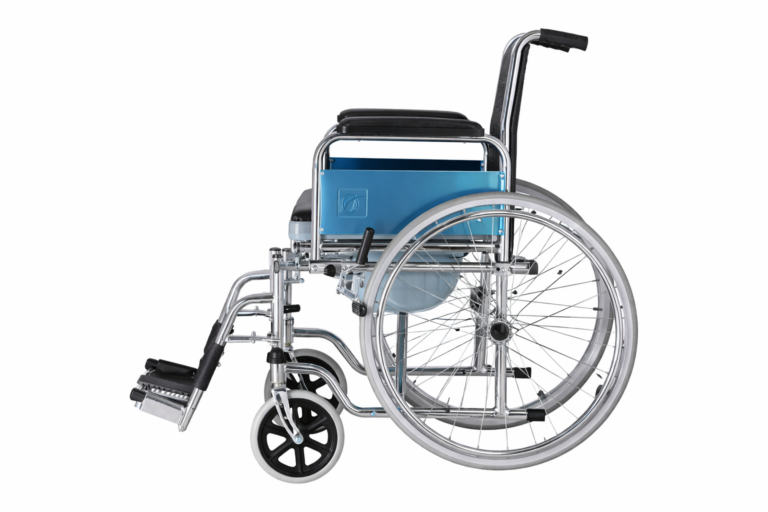
Buying Walking Aids in Kenya: Guide for Elderly Care, Clinics, and Procurement Teams
More than 1.6 million Kenyans aged 65 and above struggle with movement issues (KNBS, 2019).
Mzee Omondi’s Story: Moving Through Rough Ground in Rural Homa Bay

“When my grandfather came back home to Homa Bay after a stroke, he could not move around well. The compound had rough paths and loose gravel. There was no pavement.
We first used a basic walker with small plastic wheels. It got stuck in the soil. It almost tipped over many times.
A local physiotherapist advised us to change the equipment. We got a heavy-duty walking frame with wide rubber feet for outdoor use. We also added underarm crutches for rough areas.
Now he walks safely to see his cattle. He also sits on the veranda without constant help. Choosing the right walking aid for rural paths made a big difference.”
— Grace O., Homa Bay
This guide brings together medical, technical, and buying advice. It helps individuals, care homes, and buyers in Kenya choose, buy, and care for walking aids in a safe and simple way.
What are walking Aids?

Walking Aids for sale in Nairobi at Kans Med Supply
Walking aids help people walk, stand, or move from place to place.
They also help users get in and out of beds, chairs, and wheelchairs.
Who Needs Walking Aids: Common Health Conditions and Uses
They are made for people who have:
- Weak muscles
- Poor balance
- Joint pain
- Arthritis
- Weakness after a stroke
- Parkinson’s disease
- Recovery after surgery
- Poor vision
- Limited movement due to old age
The World Health Organization (WHO) classifies walking aids as assistive devices. They are part of the Global Assistive Technology Policy (ATscale, 2022).
WHO also reports a big gap in access. In low-income countries, only 1 in 10 people who need these devices can get them.

ATscale Report, 2022
Types of Walking Aids Available in Kenya
A simple guide to help you choose the right walking aid:
Can you walk but need help with balance?
- Cane
- Rollator
- walking frame
Do you get tired and need rest often?
- Walking frame with seat or walking stick with seat
Do you need help supporting part of your body weight?
Crutches
Do you have trouble seeing clearly?
- Blind cane
Can you not walk at all?
- Manual wheelchair,
- electric wheelchair,
- transfer chair
The American Physical Therapy Association (APTA) advises a gait check before giving any walking aid.
A physiotherapist should pick the right device for each person.
Browse Kans Med Supply’s Mobility Aids here.
How Walking Aids Are Used in Kenya

- Home-based elderly care
Many older adults live with family. Walking sticks, rollators, and walking frames help them move safely inside the home.
- Rural communities
Most rural areas have rough paths and uneven ground. Strong walking frames, rollators with big wheels, and wheelchairs work best in these areas.
- Hospitals and rehab centers
Hospitals and rehab units use wheelchairs, walkers, and transfer chairs to help patients recover and complete therapy.
- Senior living facilities
Care homes buy adjustable walking frames and rollators in bulk. These support residents with different levels of mobility.
- Churches and community programs
Faith groups and NGOs often provide walking aids.
Key Organizations to Contact in Kenya
- Association for the Physically Disabled of Kenya (APDK)
APDK is a national group focused on disability support.
They offer rehab services and custom mobility devices.
They also help fit walkers, crutches, and other aids.
Contacts: +254 722 334677.
- Hope Mobility Kenya
Hope Mobility Kenya is based in Nairobi.
They provide walkers, crutches, and other mobility aids.
They follow WHO standards for device fitting.
Contacts: +254 795 595 578 - Cheshire Disability Services Kenya
CDSK works across many counties in Kenya.
They support children, youth, and older adults with disabilities.
They also help with rehab and assistive devices.
Contacts: 0724 637323 - CURE Kenya
CURE Kenya focuses on orthopedic care for children.
They also provide mobility aids after treatment.
This includes crutches and other support devices.
Contact: +254 733 770 653 - National Council for Persons with Disabilities (NCPWD)
NCPWD is a government body.
It supports people with disabilities across Kenya.
You can apply for assistive device support through local offices.
Contact: (Toll Free) 0800 724 333
For long-term support, these groups help with fitting, access, and guidance on mobility aids.
Shop Wholesale Mobility Aids – Save More on Bulk Orders
Choosing the Right Walking Aid
This guide explains how to choose walkers, rollators, and crutches.
Quadpod for sale at Kans Med Supply
For more details on buying a wheelchair, read the related blog.
How Much Do Walking Aids Cost in Kenya?
The cost of walking aids in Kenya varies by type, features, and quality.
While low-cost options are available, price should not be the only factor when choosing a mobility aid.
A well-made product often lasts longer and provides better support.
Here are typical price ranges:
- Walking sticks: From KES 1500 – 3000
- Walking frames: KES 4,000–15,000
- Rollator walkers: KES 11,000–22,000
- Electric wheelchairs: KES 85,000 -300,000
Order High-Quality Mobility Aids Online – Fast Delivery Available
For many elderly users, a walking frame or rollator walker provides the best balance of support, comfort, and value.
Organizations such as hospitals, care homes, and rehabilitation centres should also consider maintenance costs and the availability of spare parts when comparing products.
Many walking aids qualify as duty-free medical devices under Kenyan tax regulations. If you plan to import equipment, confirm the product’s tax status with your supplier before placing an order.
Where Can I Buy Walking Aids in Nairobi
Trusted medical equipment suppliers in Nairobi, such as Kans Med Supply, offer many types of walking aids.
We stock walking sticks, walkers, rollators, and wheelchairs for different needs and budgets.
Kans Med Supply serves both individual buyers and resellers.
Shop Quality Mobility Aids – Order Here in Minutes
Good places to check include:
- Medical supply stores in the CBD, Nairobi
- Registered pharmacies that stock physiotherapy and mobility aids
- Online marketplaces such as www.kansmedsupply.co.ke
- Direct import agents that supply hospitals and care homes
Always check key details before buying:
- Product datasheet
- Weight capacity
- Frame material
- Warranty terms
- Spare parts availability
For bulk orders, ask for a proforma invoice from a registered importer.
Compare at least three quotes before you decide. This helps you get fair pricing and better-quality equipment. For both online and in-person orders, always check the delivery cost before you buy.
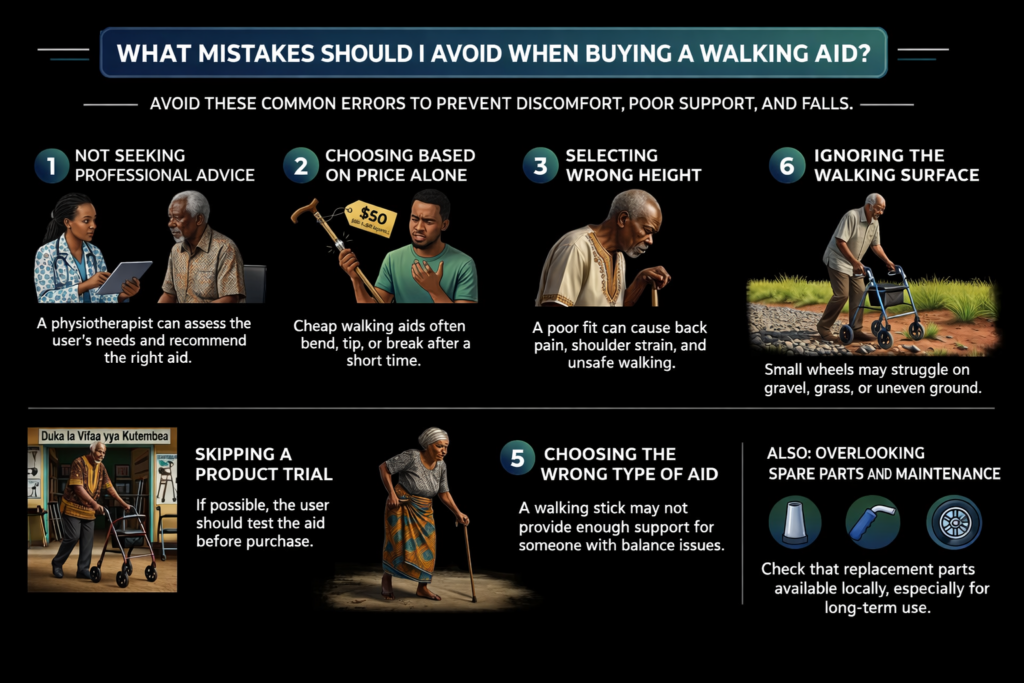
What mistakes should I avoid when buying a walking aid?
Common Mistakes Buyers Make when Purchasing Mobility Aids | Kans Med Supply
Many buyers make the same mistakes when choosing walking aids. These errors can lead to discomfort, poor support, and a higher risk of falls.
- Not seeking professional advice — A physiotherapist can assess the user’s needs and recommend the right aid.
- Choosing based on price alone — Cheap walking aids often bend, tip, or break after a short time.
- Selecting the wrong height — A poor fit can cause back pain, shoulder strain, and unsafe walking.
- Ignoring the walking surface — Small wheels may struggle on gravel, grass, or uneven ground.
- Skipping a product trial — If possible, the user should test the aid before purchase.
- Choosing the wrong type of aid — A walking stick may not provide enough support for someone with balance issues.
- Overlooking spare parts and maintenance — Check that replacement ferrules, grips, and wheels are available locally, especially for long-term use.
Taking time to choose the right walking aid can improve safety, comfort, and independence.
A proper assessment before purchase helps prevent costly mistakes.
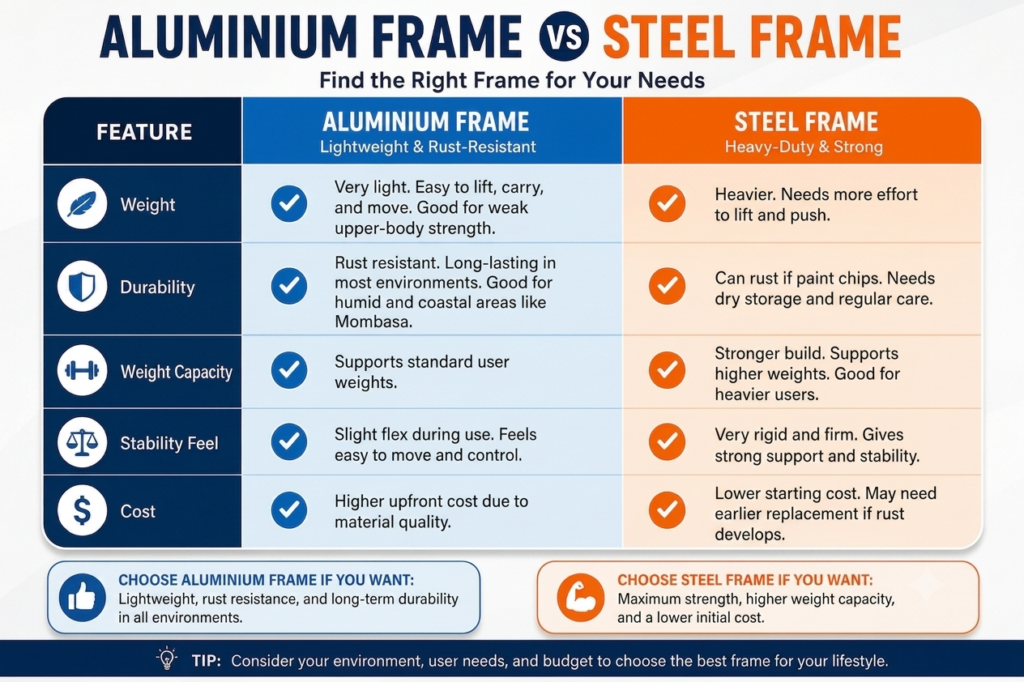
Walking frames come in two main types. Aluminium and steel.
Each one has a different lifespan and care need.
Comparison between aluminium and steel walking frames | Kans Med Supply
How do I maintain aluminium and steel walking frames properly?
Because aluminium and steel react differently to wear and weather, their care needs are not the same.
- Aluminium frames:
Maintenance is simple. - Check moving parts each month.
- Focus on height locks and spring buttons.
- Make sure they do not stick or jam.
- Steel frames:
Water causes damage. - Always dry the frame right after cleaning or rain.
- Store it indoors at all times. Do not leave it on damp floors or outside.
- Check monthly for paint chips and seal them fast to stop rust.
Note: Kans Med Supply also stocks spare parts for our walking aids.
Which walking aids are safest for uneven ground in rural Kenya?
Rural Kenya has rough paths. There is loose gravel and uneven soil. Some areas have no paved roads.
Best walking aids for these areas:
• Rollator walkers with large rubber wheels. They grip rough ground better
• Walking frames with wide rubber feet. They stay stable on uneven ground.
• Underarm crutches. They help users step carefully over rough spots.
Avoid small plastic wheels. They slip on rough paths. They also tip over easily.
Plastic wheels can be replaced with rubber. This helps the device last longer. It also keeps it working well.
What is the best walking aid for an elderly person with severe arthritis?
Rollator Walker for sale in Nairobi at Kans Med Supply
Best choices in Kenya:
• Rollator walker
• Open arm elbow crutches
Standard handles can hurt the hands. They need a tight grip. This causes pain.
Open-arm crutches reduce hand pressure. They support the arm instead of the hand.
Rollators help the user walk with light support. The body leans a bit forward. This lowers stress on the knees and hips.
Padded handles help reduce pain.
Simple soft grips work better than hard plastic.
How do I choose the right size of walking aids for a senior care home?
For care homes, adjustable models work best. They fit many users and lower stock costs.
Use simple rules for proper fit:
• The handle should line up with the wrist. The person should stand straight with arms down.
• The elbow should bend about 15 to 20 degrees when holding the aid.
• The device must fit through doors with ease. Aim for at least 70 cm width.
Always measure each user. Do not guess size. The wrong height can cause falls and pain.
Walking aids are medical devices. A poor choice can lead to falls. It can also worsen health or slow recovery.
Kenya’s older population needs safe and well-fitted walking aids. These must be strong and built for daily use.
The products in this guide include rollator walkers, walking frames, patient transfer chairs, and canes for the blind. They support different needs in both homes and clinics.
If you are unsure, talk to a registered physiotherapist before buying.
The Kenya Physiotherapy Association (KPA) lists qualified experts across the country
Reference
APTA Clinical Practice Guideline on Gait Training, 2021. | Kenya Physiotherapy Association (KPA), Clinical Guidelines on Mobility Aids, 2020.
Kenya Revenue Authority. EAC Common External Tariff Schedule, 2022. kra.go.ke | Kenya Persons with Disabilities Act, Cap 133 (2003) — VAT Exemptions.
Pharmacy and Poisons Board Kenya — Medical Devices Registration Guidelines, 2020. pharmacyboardkenya.org
Kenya Physiotherapy Association (KPA). Patient Safety in Mobility Aid Selection. 2021. | British Journal of Community Nursing. Selecting Appropriate Walking Aids for Older Adults. 2022.
NHS England. Maintenance and Safety Guidance for Walking Aids in Community Settings. 2022. england.nhs.uk | Cochrane Review: Interventions for Preventing Falls in Older Adults. 2019.
WHO. Assistive Technology in Low-Resource Settings. 2022. who.int | Handicap International. Mobility Device Recommendations for Sub-Saharan Africa. 2020
Arthritis Foundation. Assistive Devices for Arthritis. 2023. arthritis.org | Kenya Medical Research Institute (KEMRI) — Community Health Survey Report, 2021
WHO. Rehabilitation 2030: Meeting the Need. 2017. | Kenya Building Code — Accessibility Standards (2009 rev. 2019).